
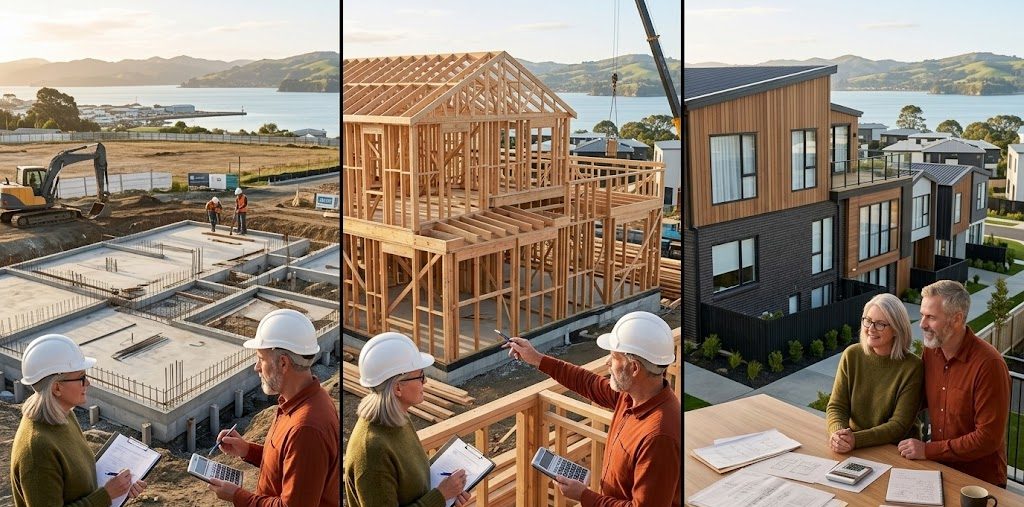
Investing in a new build property is an excellent strategy for securing your financial future. Unlike existing properties, new builds offer modern amenities, lower maintenance costs, and the potential for strong capital growth. However, the process of buying off-the-plan and seeing it through to completion can feel uncertain if you don’t understand the timeline.
This guide breaks down the new build construction process step-by-step. We will explain each stage, from signing the contract to receiving the keys, so you can invest with confidence and clarity.
The Initial Step: Buying Off-the-Plan
When you buy a new build property “off-the-plan,” you are purchasing a home before it has been constructed. This is a common and effective way to enter the property market, but the timeline differs significantly from buying an existing home.
Settlement Period: A Window of Opportunity
One of the most significant differences is the settlement period. After you sign the purchase agreement, the time until you legally take ownership (settle) can range from as little as two months to as long as 24 months. This extended timeframe is not a drawback; it’s a strategic advantage.
A longer settlement period gives you valuable time to prepare financially. You can:
- Save a larger deposit: Continue saving between the purchase date and settlement, which can reduce your mortgage size and lending costs.
- Build a financial buffer: Create an emergency fund to cover any unexpected expenses that may arise during the initial years of homeownership.
- Secure favourable financing: You have more time to shop around for the best mortgage rates and terms without the pressure of a short settlement deadline.
This built-in savings period makes off-the-plan purchases an accessible pathway for investors looking to build their portfolios without immediate, significant capital outlay.
Understanding Land Titles
When you purchase an off-the-plan property, the land title may not have been issued yet. A land title is a legal document that proves ownership of a piece of land. Delays in title issuance are normal in new build developments and are not a cause for concern.
The timing and importance of the title issuance depend on the type of property you are buying:
- Townhouse Developments: In larger developments with multiple townhouses, the titles for individual lots are often one of the last items to be issued. The developer typically waits until the entire project is near completion before lodging the paperwork for separate titles.
- Standalone Homes and Dual-Income Properties: For these properties, the issuance of the title is a critical trigger point. Construction cannot begin until the title is officially issued. Once the title is issued, your builder can proceed with obtaining council approvals and breaking ground.
Your solicitor will manage the title process and keep you informed of its status. It is a standard part of the journey and a sign that your project is moving forward as planned.
Download the Playbook to Build a Property Portfolio
The Construction Timeline: From Dirt to Doorstep
The duration of the construction phase itself depends on two main factors: the complexity of the build and the efficiency of your chosen builder. A simple, single-storey home may take 6-9 months to build, while a complex, multi-level dwelling could take 12 months or more.
Here is a clear, step-by-step breakdown of the typical construction timeline.
Stage 1: Pre-Construction – Plans and Approvals
Before any physical work can begin, your builder must navigate the pre-construction phase. This involves finalising your architectural plans and submitting them to the local council for approval. The council reviews the plans to ensure they comply with building codes, zoning regulations, and local planning schemes.
This stage can take several weeks to a few months, depending on the council’s processing times and the complexity of your application. A trusted builder will have experience with this process and can help ensure a smooth and timely approval.
Stage 2: Breaking Ground – Site Preparation
Once the council approves the plans, the exciting part begins. The builder will “break ground,” marking the official start of construction. This stage involves preparing the site for the foundation.
Activities include:
- Clearing the land of any vegetation or debris.
- Levelling the site to create a stable base.
- Setting out the dimensions of the house according to the approved plans.
Stage 3: The Foundation – Laying the Slab
The foundation is the most critical element of your new home. For most new builds in New Zealand, this involves pouring a concrete slab. The process includes:
- Digging trenches for the footings.
- Installing plumbing and electrical conduits that will run under the floor.
- Pouring the concrete to form a solid, level base for the entire structure.
The slab needs time to cure and strengthen, so there will be a brief pause before the next stage begins.
Stage 4: Framing – The Skeleton Goes Up
With the foundation in place, the frame of the house is erected. This is when your property starts to take shape. The builder will install the wall frames, roof trusses, and window frames. You will quickly see the layout of the rooms and the overall structure of your home.
This stage progresses relatively quickly and is a major milestone in the construction process.
Stage 5: The Lock-Up Stage – Securing the Exterior
The “lock-up” stage is reached when the exterior of the house is complete and the property can be secured. This includes:
- Installing the roof cladding (tiles or metal).
- Adding the exterior wall cladding (brick, weatherboard, etc.).
- Fitting all external doors and windows.
At this point, the house is weatherproof, allowing the interior work to begin without being affected by the elements.
Stage 6: The Interior Fit-Out – Bringing It to Life
This is often the longest stage of the build, as it involves detailed work from various tradespeople. The interior fit-out includes:
- Rough-in: Electricians and plumbers install wiring and pipes throughout the walls and ceiling.
- Insulation and Plasterboard: Insulation is fitted into the walls and ceiling, followed by the installation of plasterboard (drywall) to create the interior surfaces.
- Finishing Touches: The “fix-out” begins, where waterproofing is completed, and joinery such as kitchen cabinets, bathroom vanities, and wardrobes are installed. This is followed by painting, tiling, and flooring installation.
- Final Fix: Electricians and plumbers return to install light fixtures, power outlets, taps, showers, and other appliances.
Stage 7: Practical Completion – The Finishing Line
As the interior work concludes, the builder focuses on the final touches that turn a house into a home. This stage, known as practical completion, includes:
- Exterior Finishes: Landscaping, driveways, paths, and fencing are completed.
- Final Installations: Soft furnishings, such as blinds and curtains, are installed if included in your contract.
- Quality Checks: The builder conducts a thorough inspection to identify and rectify any defects or incomplete items.
You will be invited for a final walk-through to inspect the property yourself and create a list of any issues that need addressing before handover.
The Final Step: Handover and Settlement
The builder will apply for a Practical Completion Certificate from the council, which confirms the house is built according to the contract and is ready for habitation.
Once the certificate is issued and you are satisfied with the final inspection, your lender will conduct a final valuation. Your solicitor will then arrange the final payment to the builder. After the funds are transferred, you will receive the keys to your new investment property.
How Much Could You Borrow?
Invest with Confidence
Understanding the new build construction timeline makes the process clear and empowers you to make informed decisions. From the long settlement period to the final handover of keys, each stage is a deliberate step toward securing a high-quality, low-maintenance asset for your retirement.
New Build Investor and Equiti partner with trusted builders to help you navigate this journey with confidence, knowing your investment is building a stable and prosperous future.
About New Build Investor & Equiti
New Build Investor is a digital knowledge hub, powered by equiti, a New Zealand company helping growth-minded Kiwis build investment property portfolios.
Visit equiti.co.nz to view a range of investment properties available now.