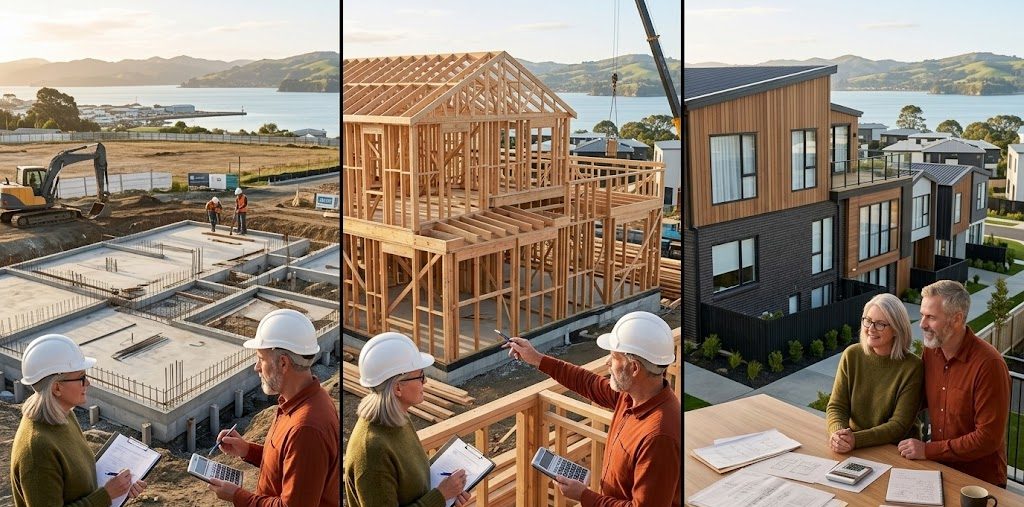

New Zealand has long been a desirable destination for people seeking new opportunities, a higher quality of life, and stunning natural landscapes. This influx of new residents, driven by various global and domestic factors, has a profound and multifaceted impact on the country’s economy and social fabric. One of the most significant areas affected by immigration is the housing market. As more people choose to call New Zealand home, the demand for housing naturally increases, creating both challenges and opportunities.
In recent years, this demand has shed a spotlight on the new build sector. This article will analyse the intricate relationship between immigration trends and housing demand in New Zealand, exploring why new build properties are uniquely positioned to meet the evolving needs of a growing and diverse population.
Understanding the Link: Immigration and Housing Demand
The connection between immigration and housing demand is a fundamental principle of economics: more people require more places to live. When net migration is positive, meaning more people are arriving than leaving, the population grows, directly fuelling demand for both rental properties and homes for purchase.
Historically, New Zealand’s net migration has always fluctuated. After a record-breaking surge when borders reopened in 2023, the numbers have normalised.
Provisional estimates from Stats NZ show a net migration gain of 14,200 in the year ending December 2025. This figure is composed of a net loss of 40,000 New Zealand citizens and a net gain of 54,200 non-New Zealand citizens. While this is one of the lowest positive migration outcomes in over a decade (excluding the COVID-19 border closure years), it is still a net gain that adds to housing demand. It’s also worth noting that this is well below New Zealand’s long-term average net migration of approximately 30,000 people per year.
This sustained, albeit moderated, population growth has a cascading effect on the housing market:
- Immediate Pressure on Rental Markets: New arrivals often enter the rental market first. They need time to secure employment, understand the local property landscape, and save for a down payment. This initial demand puts upward pressure on rental prices and can lead to lower vacancy rates, particularly in major urban centres like Auckland, Wellington, and Christchurch, where most migrants tend to settle.
- Transition to Homeownership:Over time, many new migrants aspire to own their own homes. This transition from renting to buying adds another layer of demand to the property market. Their preferences and purchasing power directly influence which types of properties are most sought after.
- Household Formation: Immigration contributes to household formation. A single migrant, a couple, or a family all represent a new household unit requiring a dwelling. As these families grow and establish themselves, their housing needs may change, further diversifying demand.
When housing supply fails to keep pace with this demand, the market tightens. This imbalance has been a defining feature of New Zealand’s property market for much of the past two decades, leading to significant house price inflation and making affordability a major national issue.
Download the Playbook to Build a Property Portfolio
Why New Builds Are a Crucial Part of the Solution
While the existing housing stock absorbs some of the initial demand, it is often insufficient and, in some cases, ill-suited to the needs of a modern, growing population. This is where the new build sector plays a critical role. New construction is not just about adding more houses; it’s about adding the right kind of houses in the right places.
Here are several reasons why new builds are perfectly positioned to meet the demand generated by immigration:
-
Increasing the Overall Housing Supply
The most direct way to address a housing shortage is to build more homes. New construction directly increases the total housing stock, helping to alleviate pressure on prices and improve availability for everyone, including new migrants. Government initiatives and changes to council planning rules, such as the Medium-Density Residential Standards (MDRS), have been designed tofacilitate more intensive development and streamline the building process, recognizing that supply is the cornerstone of a balanced market.
-
Meeting Modern Living Standards and Preferences
Today’s homeowners, including new migrants, often have different expectations thanprevious generations. They seek homes that are warm, dry, energy-efficient, and low-maintenance. New builds are constructed to the latest Building Code standards, which mandate features like double-glazing, higher levels of insulation, and modern ventilation systems.
These features not only provide a healthier and more comfortable living environment but also result in lower running costs, a significant advantage for families managing their budgets. In contrast, much of New Zealand’s older housing stock can be cold, damp, and require substantial ongoing investment in maintenance and upgrades, making new builds a more appealing and practical long-term option.
-
Offering a Variety of Housing Typologies
Immigration brings a diverse mix of people with varying needs and financial capacities. A single professional, a young couple, a growing family, and multi-generationalhouseholds all require different types of housing. The new build sector is adept at providing this variety.
Developers are increasingly focusing on a mix of housing typologies to cater to this diverse demand:
-
- Terraced Houses and Townhouses: A popular choice for small families or first-home buyers, offering a balance of space, privacy, and affordability, often in well-connected suburban locations.
-
- Standalone Houses: Still the quintessential “Kiwi dream,” these properties in new subdivisions appeal to larger families seeking more space and a private backyard.
-
- Home and Income/Dual Occupancy Properties: Perfect for multi-generational families or those looking to generate rental income, these properties offer separate living spaces on a single title.
This flexibility allows the market to respond more effectively to the specific demographic makeup of incoming migrants, ensuring that the housing being built aligns with what people actually need.
-
Financial and Government Incentives
The New Zealand government, recognizing the need to stimulate new construction, has introduced several incentives that make new builds an attractive option, particularly for first-home buyers and investors. These include:
-
- Loan-to-Value Ratio (LVR) Restrictions: Banks often have more favorable lending criteria for new builds. While an owner-occupier might only need a 10% deposit, an investor typically requires just a 20% deposit for a new build, compared to the standard 30% for an existing property. This significantly lowers the barrier to investing in new construction.
These incentives make homeownership more accessible, including for new migrants beginning their property journey in New Zealand.
-
Certainty and Reduced Risk
Purchasing a new build offers a level of certainty that is highly attractive. Buyers know they are getting a home built to modern standards, backed by builder guarantees and warranties. There are no hidden surprises like leaky roofs, faulty wiring, or decaying foundations, which can be a significant risk and financial drain when buying an older home. For new migrants who may be unfamiliar with the local building practices and potential pitfalls of the existing housing stock, the peace of mind that comes with a new build is invaluable.
The Road Ahead: Challenges and Opportunities
While the new build sector is poised to meet the housing demand from immigration, it’s not without its challenges. The construction industry faces constraints such as labour shortages (ironically, often filled by skilled migrants), supply chain disruptions, and rising material costs. Consenting processes can still be slow and cumbersome despite recent efforts to streamline them.
However, the opportunity is immense. A strategic and sustained focus on new construction can create a more stable, affordable, and resilient housing market. By aligning development with infrastructure planning and immigration policy, New Zealand can better manage its population growth and ensure that new arrivals have access to safe, warm, and secure housing.
Conclusion
The impact of immigration on housing demand in New Zealand is undeniable. As people from around the world continue to choose New Zealand as their home, the need for more housing will remain a central economic and social issue. New builds are not just a part of the solution; they are a vital component.
By increasing the overall supply, meeting modern living standards, offering diverse housing options, and being supported by government incentives, the new build sector is uniquely equipped to meet the needs of our growing population. For new migrants, a new build represents more than just a house; it offers a warm, secure, and modern start to their new life in Aotearoa. For the country as a whole, a thriving new build sector is key to building a prosperous and inclusive future where everyone has a place to call home.
About New Build Investor & Equiti
New Build Investor is a digital knowledge hub, powered by equiti, a New Zealand company helping growth-minded Kiwis build investment property portfolios.
Visit equiti.co.nz to view a range of investment properties available now.