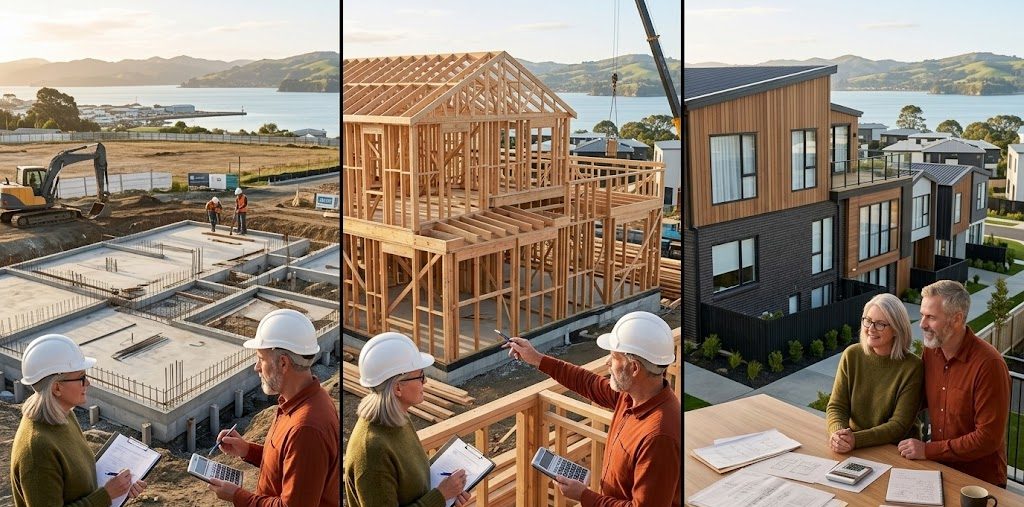

Retirement should be a time of comfort, security, and freedom. Yet, for many New Zealanders, the path to a comfortable retirement feels uncertain. Relying solely on KiwiSaver or the pension may not be enough to sustain the lifestyle you’ve worked hard to achieve. This is where strategic planning and smart investments, particularly in property, can make all the difference.
This blog will walk you through how to create a robust property investment plan tailored to your retirement goals. We’ll show you how to reverse-engineer your financial future, starting with your desired retirement income and working backwards to build a practical, actionable strategy today.
Step 1: Define Your Retirement Goal
Before you can build a plan, you need a destination. The first step is to determine how much income you will actually need in retirement. A common mistake is to underestimate this figure. While some expenses may decrease, others, like healthcare, could rise. You’ll also want to fund travel, hobbies, and time with family.
How to calculate your retirement income goal:
- List your current annual expenses: Look at your bank statements to get a realistic picture of what you spend on essentials (housing, food, utilities, transport) and lifestyle choices (dining out, travel, entertainment).
- Adjust for retirement: Think about how these expenses will change. Will your mortgage be paid off? Will you travel more or less? A good rule of thumb is to aim for 80% of your pre-retirement income to maintain a similar standard of living.
- Calculate the total figure: Let’s say you and your partner want a combined annual income of $100,000 in retirement. This is your target.
The Reality of Retirement in New Zealand
Once you have your goal, it’s crucial to understand the gap between what you need and what traditional retirement savings might provide. The Massey University Annual Retirement Expenditure Guidelines report provides invaluable insight into this.
The latest report highlights a significant shortfall for many Kiwis. For a two-person household in a major city, a “choices” lifestyle (one that includes some luxuries) requires approximately $1780.32 per week, or just over $92,576 per year. For a “no frills” lifestyle, the figure is around $937.38 per week, or just over $48,743 per year.
Now, consider what NZ Super provides: a married couple currently receives around $44,412 per year after tax. If your goal is a comfortable $100,000 income, NZ Super leaves a shortfall of nearly $55,588 every single year.
This is the retirement gap that keeps many hardworking Kiwis awake at night. Relying on KiwiSaver alone to fill this gap is a significant gamble. Property investment, however, offers a proven, strategic way to bridge it.
Step 2: Assess Your Current Financial Position
With your retirement goal defined, the next step is to understand your starting point. What assets do you currently have, and what is their value?
- Owner-Occupied Home: Your family home is likely your largest asset. Find its current market value and subtract the outstanding mortgage to determine your usable equity. This equity is the key to unlocking your investment journey.
- KiwiSaver and Other Investments: Tally up your KiwiSaver balance, shares, term deposits, and any other investments.
- Liabilities: List all debts, including your mortgage, car loans, or credit card balances.
Your usable equity is the financial leverage you can use to secure your first investment property. Lenders will typically allow you to borrow against up to 80% of your home’s value. For example, if your home is worth $1 million and your mortgage is $400,000, your total equity is $600,000. Lenders may allow you to borrow up to $800,000 (80% of $1M). This means you have $400,000 of usable equity ($800,000 lending limit – $400,000 current mortgage) that can be used as a deposit for an investment property without needing to save a cent of cash.
How Much Could You Borrow?
Step 3: Use Your Equity to Start Your Portfolio
You don’t need a large cash deposit to buy your first investment property. By using the equity in your owner-occupied home, you can fund the entire deposit.
Let’s say you purchase a new build investment property for $800,000. You need a 20% deposit, which is $160,000. This can be drawn from the usable equity in your family home. The remaining $640,000 is covered by a new mortgage on the investment property, which is partially paid for by your tenants’ rent.
Why New Build Properties?
New build properties are an ideal choice for hands-off investors planning for retirement:
- Lower Maintenance: With brand-new fixtures and fittings, maintenance costs are minimal for the first 10-15 years. This means more of the rental income goes towards paying off the mortgage.
- Attract Quality Tenants: New, modern homes attract high-quality, long-term tenants, ensuring a consistent and reliable rental income.
- DTI Exemption: New builds are exempt from Debt-to-Income (DTI) restrictions, allowing you to borrow more and expand your investment potential.
Step 4: Project Your Growth and Build Your Portfolio
The real power of property investment for retirement lies in capital growth. While the market fluctuates, residential property in New Zealand has historically delivered strong long-term growth.
Let’s use a conservative average growth rate of 6% per year to project your portfolio’s value.
Example Scenario:
- You buy one investment property worth $800,000 today, 20 years from retirement.
- At a 6% annual growth rate, that property will be worth approximately $2.56 million in 20 years.
This growth dramatically increases your equity, allowing you to repeat the process. As the value of your first investment property grows, you can borrow against its new equity to fund the deposit for a second property, and then a third.
The number of properties you acquire depends on your personal financial situation, your risk tolerance, and your retirement timeline.
- Maybe it’s one property: A single, well-chosen property can add hundreds of thousands of dollars to your retirement fund.
- Maybe it’s two or three: For a more ambitious retirement income goal, building a portfolio of several properties may be the right strategy.
- Maybe it’s more: For those starting early or with significant equity, a larger portfolio can create substantial generational wealth.
The key is to start early and let time and compounding growth do the heavy lifting.
Download the Playbook to Build a Property Portfolio
Step 5: Realise Your Gains at Retirement
As retirement approaches, you have several powerful options to convert your property portfolio into the income you need. Your strategy will depend on your desired lifestyle.
Option 1: Clear the Deck and Become Debt-Free
You can sell some or all of your investment properties. The proceeds are used to pay off any remaining mortgage on the properties and, if you wish, the mortgage on your own home. The remaining tax-free capital lump sum is yours to invest or live on. This strategy provides ultimate financial freedom.
Example: Selling the single property from our earlier example (now worth $2.56M) would likely leave you with a substantial multi-million-dollar fund for retirement, even after paying off its mortgage.
Option 2: Retain for Passive Income
Another popular strategy is to sell down part of the portfolio to become debt-free on one or two retained properties. These properties then generate a pure, passive income stream for you throughout retirement, with no mortgage payments to service.
Example: You sell two of your three investment properties, using the funds to clear all remaining debt. You keep the third property, which now generates $35,000-$40,000 per year in passive rental income, on top of your NZ Super and KiwiSaver.
Option 3: A Hybrid Approach
You can combine these strategies. Sell one property to generate a lump sum for travel and hobbies, while retaining another for a steady, long-term income stream. The flexibility of a property portfolio gives you control over your financial destiny.
Take Control with Our Digital Tools and Expert Guidance
Feeling overwhelmed? You don’t have to be. Traditionally, creating this kind of long-term financial projection required complex spreadsheets and expensive financial advisors.
We have developed a new suite of digital tools designed to simplify this process for you. Our platform helps you:
- Identify Your Retirement Gap: Input your retirement goals and current financial situation, and our tools will instantly calculate your projected shortfall. Seeing the numbers in black and white is the first step to taking action.
- Model Your Investment Strategy: See exactly how capital growth and rental income from a new build property can fill your retirement gap over time.
- Create a Clear Path Forward: Our tools transform abstract goals into a concrete, step-by-step plan, showing you what is possible and how to achieve it.
Planning for retirement is one of the most important financial journeys you will undertake. Don’t leave it to chance. The decisions you make today will determine the quality of your life for decades to come.
If you’re concerned about a potential shortfall, or if you’re ready to see how new build property investing can plug the hole in your retirement plan, it’s time to talk.
Book a free, no-obligation session with our team today. We’ll help you identify your gap and build a personalised strategy to secure the comfortable, stress-free retirement you deserve.
About New Build Investor & Equiti
New Build Investor is a digital knowledge hub, powered by equiti, a New Zealand company helping growth-minded Kiwis build investment property portfolios.
Visit equiti.co.nz to view a range of investment properties available now.